Cornerstone · Cavity walls
Is cavity wall insulation worth it?
The honest 2026 answer, broken down by your house, your current heating system, and whether you can get it for free.
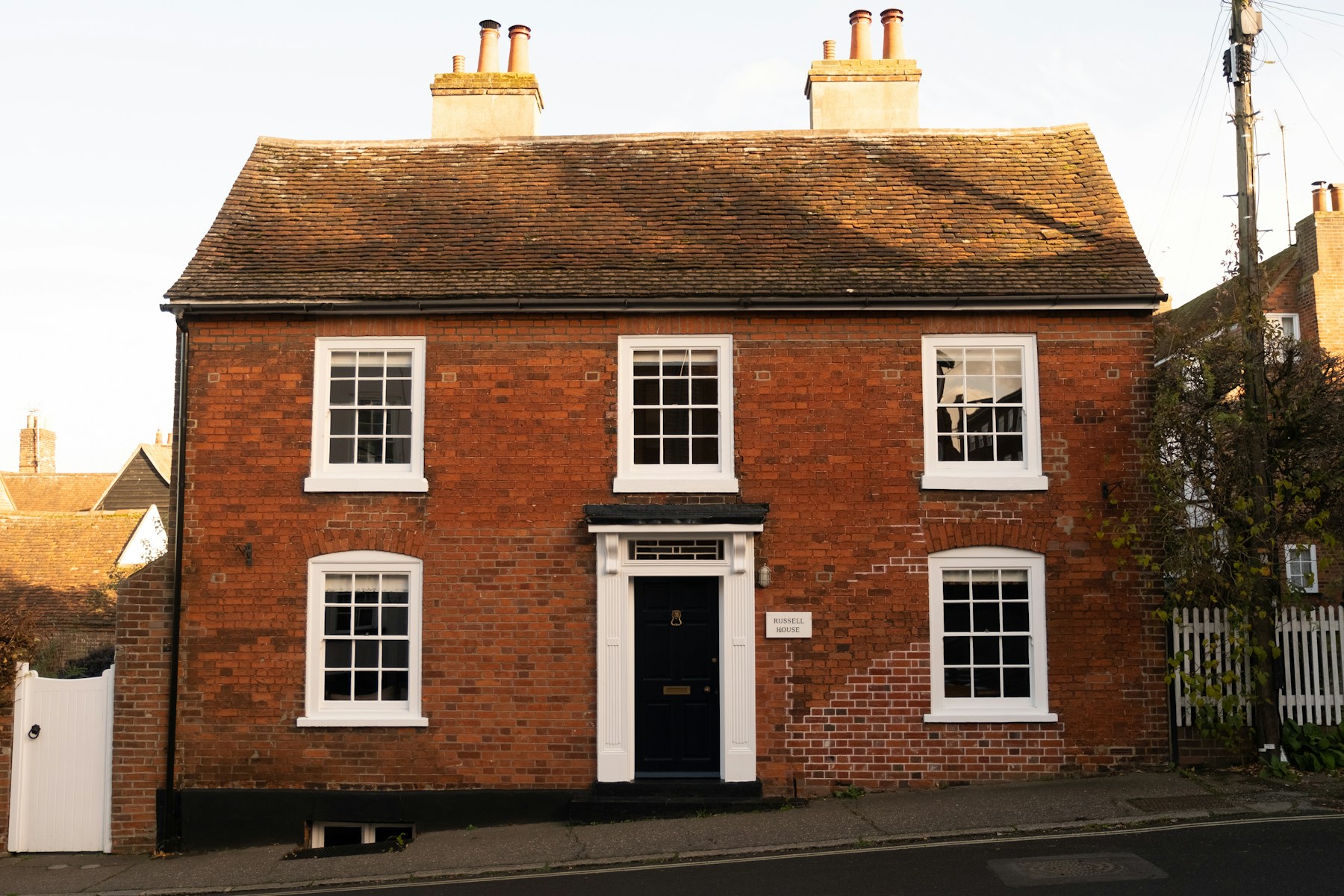
For most UK cavity-wall homes built between 1920 and 1990, yes. Cavity wall insulation typically costs £500 to £1,200 for a semi-detached house and saves £160 to £260 per year on gas heating bills.1,2 Payback is usually 2 to 5 years.
Homes already filled, homes with solid walls (pre-1920), or homes with existing damp problems are not suitable. Free grants are available for some households via the ECO4 scheme.3
"Is cavity wall insulation worth it?" is one of the most common retrofit questions UK homeowners ask. The answer depends on three things: whether your house actually has unfilled cavities, whether it can be filled safely, and whether you can get a grant. This guide walks through each one.
How much does cavity wall insulation cost in 2026?
For a typical 3-bed semi-detached house with gas central heating, expect to pay £500 to £1,200 for a full cavity wall insulation install.2 The work usually takes half a day.
The cost depends on:
- House type. Detached houses have more external wall area than semi-detached or terraced houses, so the install costs more.
- Wall height. Bungalows cost less than 2-storey houses. 3-storey houses need scaffolding, which adds £400 to £800.4
- Material. Most installers use blown mineral wool or polystyrene beads. Both perform similarly. Some use foam, which costs slightly more.
The installer drills 22mm holes in the external wall (usually in the mortar joints), blows insulation through until the cavity is full, then plugs the holes with colour-matched mortar. From the inside, you won't notice any difference. From the outside, the filled holes are visible close-up but blend in from normal viewing distance.
Can I get it for free?
Some households qualify for free cavity wall insulation via the ECO4 scheme (Energy Company Obligation, the fourth iteration).3 ECO4 runs until March 2026 and is funded by energy suppliers, who are required by law to deliver energy efficiency measures to qualifying homes.
You may qualify if:
- You receive Pension Credit, Universal Credit, Child Benefit (with household income under £31,000), or one of several other means-tested benefits, or
- Your home has an EPC rating of D, E, F, or G (regardless of income).
To check eligibility, contact an ECO4-registered installer. The gov.uk Simple Energy Advice service lists approved installers.5 If you don't qualify, you pay the full cost, which is still modest compared to other retrofit measures (a heat pump or solar panels cost ten times more).
How much will I actually save?
The Energy Saving Trust estimates cavity wall insulation saves:
- £160 per year for a semi-detached house
- £260 per year for a detached house
- £110 per year for a mid-terrace house
These figures assume gas central heating and 2026 energy prices (34p/kWh for electricity, 6.24p/kWh for gas).1,2 If you heat with electricity, your savings are higher in pounds (about 4x), but electric heating is already expensive so the bill stays high.
Your actual savings depend on:
- How you heat. If you already keep the thermostat low (16-18°C) and only heat occupied rooms, your savings will be lower. If you heat the whole house to 21°C all day, savings will be higher.
- How draughty your house was before. Cavity insulation blocks heat loss through the walls, but if your windows are single-glazed and your loft is uninsulated, those are much bigger heat leaks.
- Exposure. Homes on exposed hilltops or coastal locations lose more heat through the walls, so cavity insulation saves more.
Is my house suitable?
Cavity wall insulation only works on homes with unfilled cavity walls. You can check by looking at the wall construction:
- Cavity wall (suitable): Built from around 1920 onwards. The external wall has an outer leaf (brick or stone) and an inner leaf (brick or blockwork) with a gap (the cavity) in between. The cavity is usually 50mm to 100mm wide. Most UK homes built 1920-1990 have cavity walls, and most were built without insulation.
- Solid wall (not suitable): Built before about 1920. The wall is one solid thickness of brick (usually 9 inches / 225mm) with no cavity. Solid walls need external or internal wall insulation, which is much more expensive (£8,000 to £22,000 for a full house).2
To tell the difference, look at the brickwork pattern. Cavity walls usually have a stretcher bond (all bricks laid lengthwise). Solid walls often have a Flemish bond (alternating long and short bricks). If unsure, measure the wall thickness at a door or window reveal. Less than 260mm usually means solid. More than 260mm usually means cavity.
Your house is not suitable if:
- The cavity is already filled (check your EPC certificate or ask the previous owner).
- The walls have existing damp problems (water stains, peeling paint, mould). Filling the cavity can make damp worse.
- The external render or pointing is cracked or damaged. Rain can get through the outer leaf and bridge across the insulation.
- The cavity is narrower than 50mm. Some 1920s-1930s houses have 50mm cavities, which is the minimum for safe filling.
- The house is in a severe wind-driven rain zone (exposed coastline, hilltops). Check the BRE exposure map.7
A proper survey before install checks all of this. Any reputable installer will walk away if your house isn't suitable, because a bad install leads to damp and a ruined reputation. Most UK cavity wall installs are backed by a 25-year guarantee from CIGA (Cavity Insulation Guarantee Agency).8
Does cavity wall insulation cause damp?
Properly installed cavity wall insulation does not cause damp. Problems arise when installers fill walls that should not be filled. The cavity exists to keep rain out. Rain hits the outer leaf, runs down the inside face, and drips onto cavity trays that channel it back outside. If the cavity is filled with insulation, rain can track across to the inner leaf if the outer leaf is compromised (cracked render, missing pointing, porous bricks).
The main causes of damp after cavity wall insulation are:
- Pre-existing defects not spotted. Cracked render, damaged cavity trays, missing weep holes.
- Wrong house for the location. Homes in severe wind-driven rain zones should not have cavity insulation unless the external wall has a weatherproof cladding or render system.
- Cavity too narrow. If the cavity is under 50mm, the insulation can bridge the gap even without external defects.
If your installer follows the BRE Good Building Guide on cavity insulation and does a proper pre-install survey, the risk is low.7 The vast majority of UK cavity wall insulation installs have no damp issues. When problems do occur, they're usually traced back to skipped surveys or pre-existing wall defects.
What type of insulation is best?
The three common materials are:
- Mineral wool (blown fibre). The most common. Good thermal performance, breathable, non-combustible. Can settle slightly over time, leaving gaps at the top.
- Polystyrene beads. Also common. Slightly better thermal performance than mineral wool. Water-resistant, so sometimes preferred in wetter climates.
- Foam (polyurethane). Less common, slightly more expensive. Fills the cavity completely with no risk of settling. Some homeowners avoid it due to fire performance concerns, though modern foam meets building regs.
The performance difference is small. All three reduce heat loss by about 60% compared to an unfilled cavity.6 Your installer will recommend a material based on your house and location.
Check if your house is suitable
5-question eligibility check
Answer these questions to get a rough idea of whether cavity wall insulation makes sense for your house. This is not a substitute for a proper survey.
Summary
Cavity wall insulation is one of the most cost-effective retrofit measures for UK homes. If your house was built 1920-1990, has unfilled cavities, and is in reasonable condition, the payback is 2-5 years. Many households can get it for free via ECO4. The work takes half a day, and the insulation lasts 40+ years.
If you're unsure whether your house is suitable, ask for a free survey from two or three installers. Any installer who offers to fill your cavity without a proper survey should be avoided.
Related reading
- Is solid wall insulation worth it? (for pre-1920s homes with no cavity)
- Is roof insulation worth it?
- Is floor insulation worth it?
- Insulation board types explained
Sources
- Ofgem (2026). Energy Price Cap. www.ofgem.gov.uk/energy-price-cap. Accessed May 2026.
- Energy Saving Trust (2026). Cavity Wall Insulation. energysavingtrust.org.uk/advice/cavity-wall-insulation/. Accessed May 2026.
- GOV.UK (2025). Energy Company Obligation (ECO4). www.gov.uk/energy-company-obligation. Accessed May 2026.
- HomeOwners Alliance (2025). How much does scaffolding cost? hoa.org.uk/advice/guides-for-homeowners/i-am-improving/how-much-does-scaffolding-cost/. Accessed May 2026.
- GOV.UK (2026). Simple Energy Advice. www.simpleenergyadvice.org.uk/. Accessed May 2026.
- BRE (2019). The Government's Standard Assessment Procedure for Energy Rating of Dwellings (SAP 10.2). BRE, Watford.
- BRE (2020). Good Building Guide 45: Insulating masonry cavity walls. BRE, Watford.
- CIGA (2026). 25-year guarantee for cavity wall insulation. www.ciga.co.uk/. Accessed May 2026.